
If you’ve started feeling back pain, stiffness, or have suffered a recent injury, then you may consider electrotherapy as a helpful tool to aid in your recovery. At Fitzwilliam Road Medical Centre, we use this gentle treatment to support healing, reduce swelling, and relieve discomfort, so you can move more freely and feel better in your body.
We welcome patients from Old Toongabbie, Toongabbie, Pendle Hill, Wentworthville, Northmead, Winston Hills, Seven Hills, Constitution Hill, Bella Vista, Kellyville, Schofields, Marsden Park, Girraween, Westmead Parramatta, Greystanes, Merrylands, Prospect, Blacktown, Quakers Hill, surrounding suburbs and beyond.
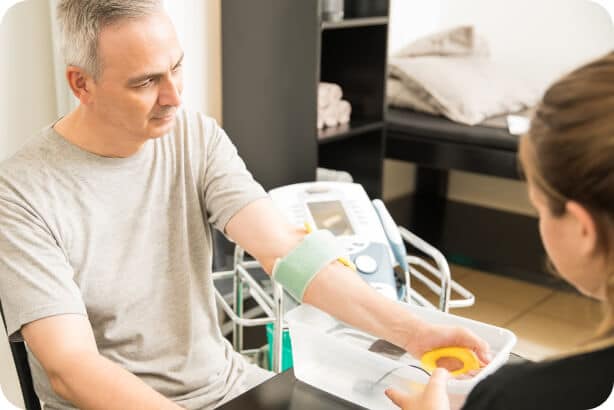

Electrotherapy is a safe, non-invasive treatment that uses low-level electrical currents to stimulate your muscles and nerves. It can be used to:
At Fitzwilliam Road Medical Centre, our team may recommend electrotherapy treatment as part of your overall care plan. It’s especially helpful for people dealing with chronic pain, sports injuries, or after certain surgeries.
When you visit us for electrotherapy physiotherapy, we’ll first take time to understand your condition. We’ll ask questions, listen to your concerns, and assess your pain levels and movement.
If electrotherapy is right for you, we’ll gently place small electrode pads on your skin over the painful or injured area. These pads deliver mild electrical pulses, which feel like a gentle tingling or buzzing. Most patients find the process relaxing while many feel relief even after the first session.
Our experienced team will make sure you’re comfortable during the whole process, and explain everything in simple, easy-to-follow steps.


There are many electrotherapy benefits. It’s widely used in injury recovery because it:
As part of a broader rehabilitation plan, electrotherapy can be especially helpful for managing workplace injuries, sports injuries, and chronic conditions. At our Old Toongabbie clinic, your care is personalised to your health goals and daily needs.
If you’re looking for drug-free pain relief or a way to support your healing, come talk to our caring team at Fitzwilliam Road Medical Centre. We offer expert electrotherapy treatment as part of our physiotherapy and injury care services.
Book your appointment with us today. We’re proud to support the health and recovery of our neighbours in Old Toongabbie, Toongabbie, Pendle Hill, Wentworthville, Northmead, Winston Hills, Seven Hills, Constitution Hill, Bella Vista, Kellyville, Schofields, Marsden Park, Girraween, Westmead Parramatta, Greystanes, Merrylands, Prospect, Blacktown, Quakers Hill, surrounding suburbs and beyond.
Call us or book online to see how electrotherapy can help you feel better, gently and effectively.
A non-invasive therapy that uses gentle electrical currents through skin electrodes to help manage pain, reduce swelling and support muscle recovery, usually as part of a broader physio/rehab plan. Your clinic lists Electrotherapy among its services.
Common options include TENS (for pain relief), interferential current (IFC) and neuromuscular electrical stimulation (NMES) (to activate muscles). Your clinician will choose what suits your condition.
Small adhesive pads are placed on the skin; you’ll feel tingling or gentle muscle pulsing. It shouldn’t be painful—tell your clinician if it is so they can adjust the settings.
It’s often used for musculoskeletal pain, post-injury swelling, and muscle activation during rehab. Evidence varies by condition—some people find meaningful relief, others need different approaches.
Generally safe when used properly. Do not use over broken/irritated skin, on the head/neck/chest, near tumours, in water, or while driving. People with pacemakers/implanted defibrillators, certain seizure disorders, or during pregnancy over the abdomen should avoid or seek medical advice first. Your clinician will screen for risks.
Usually mild—temporary skin redness or irritation under electrodes. Stop and tell your clinician if you feel unwell or develop persistent discomfort.
It depends on your diagnosis and goals. Electrotherapy is typically paired with exercise-based rehab and load management rather than used alone.
Possibly. Your clinician can advise on device choice, safe settings and when home use is appropriate for you. (Always follow instructions and safety guidance.)
If provided as part of physiotherapy, it’s usually privately billed. Some patients can access Medicare-subsidised allied-health visits via a GP Chronic Condition Management Plan (GPCCMP) (from 1 July 2025; transition rules apply for older plans until 30 June 2027). Gap fees vary—ask reception.
Allow 20–40 minutes, depending on assessment and whether it’s combined with other physio treatments.
Education and program reviews can often be done by phone/video, but the treatment itself is in-person.